What's new
Peugeot RCZ Forum

Register a free account today to become a member. It's free! Once signed in, you'll be able to participate on this site by adding your own topics and posts, connect with other members through your own private inbox and take part in competitions!

Hi From Slovakia my new RCZ

Nadzi

New Member
Joined
Nov 18, 2025
Messages
13
Reaction score
1
Points
3
Location
Bratislava-Petržalka
Hello. Today I became the proud owner of a Peugeot RCZ. I am switching from a Citroën C6.
The car has a 1.6 THP 200 engine and 211,000 KM on the clock. The car has a MOT but has not passed the emission control.

I am very happy with how the whole car looks and how beautiful it is. However, I have some problems with the engine and it will definitely need service.
I want to ask you for advice, I am a complete novice in this segment.

The engine runs irregularly. The power fluctuates quite a bit and you can feel some burning during sharp acceleration.
The car has been standing for 6 months and has not been driven.
The owner told me a lot of things, but I honestly don't know what is true.
but I don't mind that I want to repair the car myself and take care of it.

Non-original diagnostics show me such errors.

P1340 - Camshaft Position Sensor B Circuit Malfunction
P1385 - Variable Cam Timing Solenoid B Malfunction
P2339 - Cylinder 4 - above knock threshold
P2074 - Manifold absolute pressure (MAP) sensor/mass air flow (MAF) sensor - throttle position
P0104 - Mass air flow (MAF) sensor/volume air flow (VAF) sensor - circuit intermittent
P1336 - Crank / Cam Sensor Range / Performance S2000OM1/2 - High misfire on several cylinders ME7.4.5. Combustion misfiring on unspecified cylinder

I will be glad for any advice at the beginning.
 

EddieJ

Active Member
Joined
Mar 29, 2025
Messages
114
Reaction score
37
Points
28
Location
Belfast
That’s quite a bit, possibly suggesting the car has had a hard life with little maintenance, or ‘by the book’ maintenance.
Its hard for anyone to be precise without putting a hand on the car so this is only my opinion.
The burning smell could be from a leaking rocker cover gasket, a common enough issue on them, but there are a few other common oil leak spots such as the turbo oil feed pipe and the fuel filter housing to block gaskets.
The first three dtc’s can be lack of servicing, ie bad oil and overdue plugs but as the car has been sitting about and with high enough mileage, it could be effects of damp around connections. Do you know the service and timing chain history?

If it were me I would start with a compression test and see if the cylinders are close to equal and making good pressure, cylinder knock could be from timing, valve or injector issues. Followed by a new timing chain kit, if compression is healthy, inc both vanos and vanos solenoids and a darn good full service. With the rocker cover off you’ll know the service regime that it has had, stained black and goop over the cams isn’t something you’ll want to see. If it is foul you might want to take the sump off and clean it out along with an inspection of the oil pump.
You might need to changeout the coil packs too.
Then if the intermittent faults remain I’d be searching through the sensor connection for any signs of corrosion.

Costs could rack up quite quickly and it may actually be that putting the car in somewhere to be looked at could save you money in the long run.
By the way, good luck with it and keep posting as you progress, someone might be able to say something very specific that helps you or you might come across something that may help others.
 

Nadzi

New Member
Joined
Nov 18, 2025
Messages
13
Reaction score
1
Points
3
Location
Bratislava-Petržalka
Thank you very much for the very quick reply. I have very little information about the service status and I personally doubt the truth. According to the previous owner, a new timing belt kit was replaced, the valve cover gasket was new, the head gasket was new, the head was flat, new bolts were installed. However, I have no proof at all of this and I don't know if it is true.
However, I have no proof at all of this and I don't know if it is true.
Nemám však žiadny dôkaz o tom a neviem, či je to pravda.
However, I have no proof of this at all and I don't know if it's true.
Nemám však žiadny dôkaz o tom a neviem, či je to pravda.


I am leaking oil from the turbo line. Can I fix it myself at home? My mechanic can take me for a checkup on Tuesday, but for now I want to do at least the basic things.

The coils are new, but the owner said he only did 3 and a quarter that needed to be fixed. When I went to change the coil, it wasn't fully pushed in. I looked inside where the spark plug is and there is a bent rubber from some coil and some coil was connected to it that is about 4 centimeters shorter. Could this be causing misfire or is it okay to have another coil?

Personally, I don't think the timing was changed because they didn't adjust the timing.
 

Verminator

Moderator
Staff member
Joined
May 29, 2018
Messages
2,009
Reaction score
954
Points
113
Location
North Yorkshire
Coil 3 is a common indicator of the hpfp a quick check is swap coil pack for one that is running fine and if you put in number 3 and it changes or works fine in the one that you have swapped then it's down to the high pressure fuel pump....
Hope this helps you out
Drive safe and stay lucky 🍀
Les n Co
 

EddieJ

Active Member
Joined
Mar 29, 2025
Messages
114
Reaction score
37
Points
28
Location
Belfast
I overlooked the hpfp, as Les says it is another common fail point that can give you all sorts of running issues as you listed above. The oil in them can sludge and or escape. There is a means of measuring to give an initial idea of condition, YouTube hpfp rebuild for a bit of a guide as to measurements etc. Replacements can be expensive, watch for refurb units from china, they can be very hit and miss to actually being refurb’d.

The oil feed pipes can be done at home, without removing the radiators (book says remove), however it is awkward for access and can get quite involved. I have sort of stepped through it so you can get an idea of how involved it is so you can better decide.

You will need to disconnect the flexi section of the exhaust (V band clamp may break if it’s rusted, good dose of penetrating oil in advance).
Then off with the heat shields around the cat and take the cat off, the cat can be lowered down with a twist to get it out of the way. The front heat shields around also lowers out of the way, and with a twist to get it out the bottom, just be careful of the radiator fins, piece of cardboard tucked in can help.
With the cat out of the way you can access the oil feed line from block to turbo, at this level of stripping it is well worthwhile to also change the gaskets on the filter housing, they dry and harden too and you don’t want to have to start removing the cat and second time soon after. Be sure to drain the coolant down as the oil filter housing has both oil and coolant thru it.
Youll need to consider having the following to hand if you do attempt at home, penetrating oil, exhaust clamp, turbo to cat gasket, oil filter housing gaskets (id suggest inner and outer if your that far in), turbo oil feed and return pipes, oil filter, oil (small quantity of coolant will dribble into the sump when you unscrew it from the block, so oil will need changed), lots of brake and clutch cleaner as all mating surface should be like new Before reassembly.The cat/turbo nuts and bolts will also be well rusted, soaking in pen oil may help but I’d have new ones to hand so as not to hold back the rebuild.

When your cats off, check you turbo - impeller condition and wastegate play. There are various videos online about turbos to help.
 

Nadzi

New Member
Joined
Nov 18, 2025
Messages
13
Reaction score
1
Points
3
Location
Bratislava-Petržalka
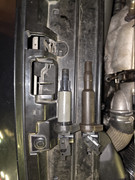
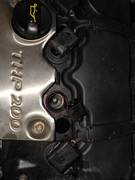
Great, thanks for the advice. How can I remove the cracked rubber in the third spark plug?

picked out this coil and there was the silver one in the picture. The other three coils are the brown NGK ones. The silver one is the shorter Denckerman brand.


As I can see in the second picture, the third coil has a stuck or broken rubber inside and I can't get it out. In this third hole was the smaller coil.


Last edited:

EddieJ

Active Member
Joined
Mar 29, 2025
Messages
114
Reaction score
37
Points
28
Location
Belfast
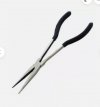
A hook and pick set or long needle nose plies Should get you there.
 

Attachments

  • IMG_1004.jpeg
    IMG_1004.jpeg
    15.8 KB · Views: 4
  • IMG_1003.jpeg
    IMG_1003.jpeg
    24.6 KB · Views: 3

Nadzi

New Member
Joined
Nov 18, 2025
Messages
13
Reaction score
1
Points
3
Location
Bratislava-Petržalka
Thank you very much. I ordered the pliers, they should arrive tomorrow. Next week the car will go to the mechanic who will explain what and how. The car did not pass the emission control. The problem was in the Lambda probe protocol. Is there really a problem with the lambda or what else should I check regarding the emission control so that the car passes again?
 

Nadzi

New Member
Joined
Nov 18, 2025
Messages
13
Reaction score
1
Points
3
Location
Bratislava-Petržalka
so today i managed to remove the broken rubber from the coil. i replaced it with an NGK that belongs there and the car has cooled down by about 30 percent. it doesn't shake so much anymore and it runs pretty well but after a while of driving i feel like it's losing power. this is what the engine sounds like for a few minutes when cold.

 
Last edited:

EddieJ

Active Member
Joined
Mar 29, 2025
Messages
114
Reaction score
37
Points
28
Location
Belfast
sound files through phones etc always seem to pick up tapping rattling etc and don’t give a fair representation of what the engine truly sounds like, or my ears are just too old. Your 2.0L diesel sounds fantastic 😜 It does sound even and not missing.
Rescan the ecu and see what dtcs are still active and that might start leading you.
 

EddieJ

Active Member
Joined
Mar 29, 2025
Messages
114
Reaction score
37
Points
28
Location
Belfast
Thank you very much. I ordered the pliers, they should arrive tomorrow. Next week the car will go to the mechanic who will explain what and how. The car did not pass the emission control. The problem was in the Lambda probe protocol. Is there really a problem with the lambda or what else should I check regarding the emission control so that the car passes again?

Missed your bit about the lambda probe, they do fail and if one is failed the ecu can tell the car to lessen or increase fuel mix and taking it further from stoichiometric which is why the emission could fail. Left unchecked too long can cause cat damage and other engine components. If you can read the live data on both the sensors you’ll quickly see which on is gone, you’ll be looking for S1:B1 and S2:B1, when the car is up to temp you’ll see each of them read and fluctuate with gentle revs. You can also see the stoich values, but I can’t rem what its parameter is called. Also note, engine up to temp before you see rates of change correctly. This can also have an affect on the smoothness of the running.
If I get a chance later I’ll plug in a basic obd reader and show you what I mean.
Incidentally, if one has failed the other is the same age so will probably fail soon after, and they are located either side of the cat and can be seized in place.
 

EddieJ

Active Member
Joined
Mar 29, 2025
Messages
114
Reaction score
37
Points
28
Location
Belfast
When you’re looking at your lambda sensors, engine off, they should be showing around 0.455 (steady constant).
Your obd reader might show things slightly differently.
Engine running you can see the upstream b1:s1 is reading something like 400 and still warming, b2:s2 is still a constant while warming.
Engine warmed they are both towards 700-800 and fluctuating, but number wise staying close to each other (aprox 100+/-) gentle revs will see them further move possibly pulling away from each other before the ecu does it’s magic with the fuel and air then they come close again.
You can see the short term fuel trims fluctuate in line attempting stoich at nearly 0.
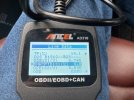
couple photos attached. Main thing to be looking at is that they are reading well and the fuel trims follow changes with revs. S1 is above the cat, s2 after cat.
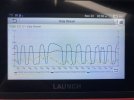
I did plug in launch and do some nice graphs of the whole thing but might be hard to read on a small screen.
Also let’s me see that I have fluctuation on b1:s1

Hope this of some use, and just note if your not sure…..don’t, let your mech do it.

1763826159754.jpeg
1763826211800.jpeg
1763826413160.jpeg
 
Last edited:

EddieJ

Active Member
Joined
Mar 29, 2025
Messages
114
Reaction score
37
Points
28
Location
Belfast
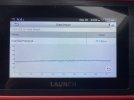
Heres a pic of the fuel rail pressure, if you think you have an hpfp issue it’ll give you something to compare to.
It should be fairly constant at idle, taking a slight dip and recovering on gentle revs.

1763826912726.jpeg
 

Nadzi

New Member
Joined
Nov 18, 2025
Messages
13
Reaction score
1
Points
3
Location
Bratislava-Petržalka
Ďakujem veľmi pekne za rýchle odpovede. Mám trochu inú OBD diagnózu, neviem nájsť žiadne iné hodnoty okrem tých, ktoré sa mi podarilo odfotiť.

Vymenil som všetky zapaľovacie sviečky, cievky, novú batériu a hornú lambda sondu. Keď som vybral starú lambda sondu, jej hrot bol úplne čierny od sadzí. Kde sa, prosím, nachádza druhá lambda sonda? Musím ísť pod auto alebo sa dá vybrať zhora?

Keď naštartujem studené auto, motor beží krásne hladko a nestrieľa z neho výfukové plyny. Keď sa motor zahreje a idem s autom šoférovať, motor sa trasie a nestrieľa z neho výfukové plyny. Mechanik je momentálne zaneprázdnený, tak dúfam, že tam čoskoro príde.

V ďalšom príspevku vám ukážem, čo sa mi podarilo získať.
 

EddieJ

Active Member
Joined
Mar 29, 2025
Messages
114
Reaction score
37
Points
28
Location
Belfast
Thank you very much for the quick replies. I have a slightly different OBD diagnosis, I can't find any other values than the ones I managed to take a picture of.

I replaced all the spark plugs, coils, a new battery and the upper lambda sensor. When I removed the old lambda sensor, its tip was completely black with soot. Where is the second lambda sensor located, please? Do I have to go under the car or can it be removed from above?

When I start a cold car, the engine runs beautifully smooth and doesn't shoot exhaust fumes. When the engine warms up and I go driving the car, the engine shakes and doesn't shoot exhaust fumes. The mechanic is busy at the moment, so I hope he gets there soon.

In the next post I will show you what I managed to get.


Okay, as you know one is up beside the turbo, referred to pre cat or upstream, the second one is straight down at the bottom of the catalytic converter and referred to as downstream or post cat, just at the bend in the pipe, It has a similiar look to the top one from the outside. The black sooting doesn’t mean it’s failed, it could be that the engine is running rich from another fault. Do not buy a generic sensor, ensure you get it thru an autofactors or good car parts supplier. There are ones available thru online shops that claim to be generic and fit all, I wouldn’t recommend going this route.
It would be really good if you could view them live to actually diagnose them as faulty before spending money you might not need to.

You could have hpfp (higo pressure fuel pump) issues causing your engine instability and or issues with your vanos systems throwing you engine into a hunting scenario. There was a topic on hpfp diagnosis on the forum last week if you take a quick search for hpfp it will pop up, gives the diaphragm measurements in it. Also, think I mentioned before, if you oil is or has been allowed to get foul this could cause issues with how the vanos solenoids are able to act including the vanos gears. Without useful diagnostics you could end up spending money you don’t need to on parts or worse, cause additional issues.

Maybe focus on your oil leak behind the cat at the oil filter housing, followed by a really good service and see if that starts to help with the vanos issues. Rem the steps I mentioned before about draining down and checking your turbo. This also would be a good use of time waiting for a gap with your mech. Then your mech has a hopefully leak free engine to start going forward with.
 

Nadzi

New Member
Joined
Nov 18, 2025
Messages
13
Reaction score
1
Points
3
Location
Bratislava-Petržalka
yes I understand I don't want to spend unnecessarily on things that are not needed but I don't want it to leave me somewhere in the future so I don't mind replacing parts that are cheap as a precaution. the original lambda probe from Bosch cost 89 euros which is not such a terrible price.

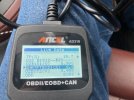
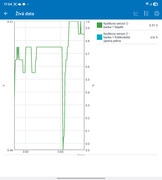
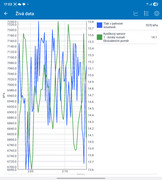
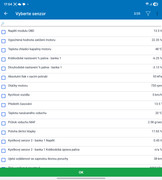
I'm adding photos from live data but it's in Czech but maybe you can see if it's okay


EddieJ

Active Member
Joined
Mar 29, 2025
Messages
114
Reaction score
37
Points
28
Location
Belfast
Well as the both sensors were the same age they will have the same wear on them so if one has failed the probability is the other one is nearing the end of its functional lifespan. As your replacing with a good quality (Bosch) you should be doing no harm.
When reading the lambda sensor, when warmed up, the voltage will move, but equally important is the short term fuel trims (sometimes seen abreviated SHRTFT bank 1 or bank 2) continuously adjusted within a small pattern (as my screenshot) suggests they are operating okay And adjusting mix rates to give the best fuel burn, in turn attempting to keep emissions with a range. A gentle rev should see them alter around, but return to equalish.
I can’t comment on your graphs as I am not sure what they are.
 

EddieJ

Active Member
Joined
Mar 29, 2025
Messages
114
Reaction score
37
Points
28
Location
Belfast
Nadzi,
I am going to step back a few paces and go over a few things from your initial list just to guide you as you have 211k on your engine.
Your engine is running rough and has failed emissions tests. There are quite a few things that can cause this, some are:
Damaged valve or valve seat, hpfp failing, failing turbo seals, worn piston rings, bad injector(s), fouled inlet valves, worn valve guides, worn or perished valve stem oil seals. Lambda sensor issues could be contributing, but could be the result of incorrect fueling, fuel entering the system from another source, ie engine oil getting by rings or seal, or fuel not fully burnt entering the exhaust system. Computers only tell you so much, but basic checks can tell you a lot a computer can’t.

Remember, it’s running rough, cyl4 is knocking above limits, it’s failed emissions and it’s got 211k on it. If it were me I would rewind and perform a compression test on all cylinders to start ruling things out and to get an idea of the core engines condition before getting in to all the fancy bits, that could very quickly rack up a big bill and still have a broken engine. Memory is for 160-175 on each cylinder, I’ll look it up when I get home tonight.

You have done the basics, in that you have changed the plugs and coil packs, with no improvement I assume? Hopefully that at least cleared the misfires if not then look at the hpfp. Measure it and feed back what you get.

Move through methodically and you will get there.
 

EddieJ

Active Member
Joined
Mar 29, 2025
Messages
114
Reaction score
37
Points
28
Location
Belfast
Okay another few minutes to myself so here’s another bit of info.

The vanos system in the prince engines works by altering the timing of the valves under different loads or rpm. It can also be referred to as VVT or variable valve timing. The engine ecu monitors various conditions within the engine and when the required conditions are met it will alter the timing of the valves by allowing the cam gear to slip from the cam shaft position, in turn opening the valves ever so slightly later in the piston cycle. It does this by the hydraulic oil pressure of the engine oil being allowed through the vanos solenoid and into the vanos cam gear, which in turn ‘unlocks’ the gear allowing it to move from its static position. This is read by the cam position sensor back to the ecu to say position achieved. Oil condition and lack of maintenance can be a contributing factor.

So bringing that theory in-line with a few of your fault codes:
P1340 - Camshaft Position Sensor B Circuit Malfunction
P1385 - Variable Cam Timing Solenoid B Malfunction
Could be as a result of the solenoid not activating, either through the solenoid no longer functioning or being fouled. If you remove the solenoid and look at it there is a very tight mesh if which is blocked then it’s movement could be restricted. You should be able to visually see this by removing it, put a rag below as a small amount of oil will come out, black goop and carbon deposits. You can also bench test its functionality by applying 12v to the terminals and watching it move, it is polarity sensitive so take note of the wire positions in the plug. In either case foul or broke best to replace. There is also a check valve or non return valve directly below the solenoid with should be removed, cleaned and inspected at the same time as if it it not seating correctly the pressure through the solenoid will not be maintained to the vanos cam gear. This can lead to the camshaft position sensor fault as the ecu is not receiving the desire signal back, could be its faulty too but probability is the solenoid not operating is then leading to this fault appearing. The cam gear can go faulty too but we will keep that for another section as it means rocker cover off to inspect.

On the 200hp engine there are two solenoids, two vanos and two cam position sensors. One group for the inlet valves and the other for the exhaust valves.
The inlet is at the rear of the engine beside the timing chain tensioner and the exhaust is just above the alternator.
 
Top