What's new
Peugeot RCZ Forum

Register a free account today to become a member. It's free! Once signed in, you'll be able to participate on this site by adding your own topics and posts, connect with other members through your own private inbox and take part in competitions!

Wrong chain tensioner for year of car?

nonlinear

New Member
Joined
Jul 19, 2022
Messages
11
Reaction score
2
Points
3
Location
East Sussex, UK
I've just replaced the tensioner in my 2013 THP156. I thought that as a later car it should have had one of the revised tensioners fitted, but it had an older style flat headed one.
Has anyone else come across this? Would this mean the rest of the internals are of the older design?

1666000346580.png
 

nonlinear

New Member
Joined
Jul 19, 2022
Messages
11
Reaction score
2
Points
3
Location
East Sussex, UK
Sure, but I thought (by reading these forums) that by 2013 this issue had been resolved on mk II RCZs and I expected to find the next design of tensioner with the hole in the top fitted. It really needs spelling out clearly for the benefit of future buyers of this car that that is not the case.
 

Pedro

Well-Known Member
Joined
Jan 16, 2020
Messages
2,858
Reaction score
880
Points
113
Location
Cheshire
Year of manufacture is meaningless its the specification of the component fitted that matters the tensioner is made to the tolerances expected for it to preform its function no matter how long its lifespan is but one thing is certain they will not last the life of the chain & clean oil is the key to their longevity as for BMW telling every owner with these engines fitted to check & replace the timing chain tensioner would be admitting they are liable for recall issues
 

nonlinear

New Member
Joined
Jul 19, 2022
Messages
11
Reaction score
2
Points
3
Location
East Sussex, UK
The point is I've seen plenty of posts saying that the MK II RCZ had an improved tensioner and guides fitted, which would be to an improved specification, so the year of manufacture is very relevant. From my experience it is not true that all MK II's have these improved components fitted.
 

Pedro

Well-Known Member
Joined
Jan 16, 2020
Messages
2,858
Reaction score
880
Points
113
Location
Cheshire
I think the upgrade was to do with the o ring seals
 

MJZ

Member
Joined
Oct 6, 2021
Messages
42
Reaction score
15
Points
8
Location
France
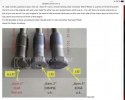
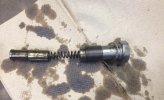
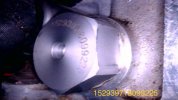
Hi Non…the timing chain tensioner is a well documented weak link in this engine and the RCZ. I have seen 3 incarnations, as seen it pic 1. The plain face is apparently the oldest and in my opinion should be ditched as it was responsible for for the early failures….and if there is a warehouse somewhere full of them, they should be ground down into iron filings, not continue to be distributed….that would be totally irresponsible. I made a point, when ordering mine, not to send this one. I received the one with the dimple, centre in pic. But I fear I must shatter some perceived views about this model…the one I took out of my car was also a dimple version and it was truly knackered, see pic 2. I hope the one I put in will last longer…my car has only done 20,000 miles (2014 model). The one I put it also has a serial number stamped on the face, see pic 3…so it might be possible to trace its manufactured date. I might try and do that. Regarding the rest of your internals…they would of course be 2013 unless you had a full timing chain kit refit…then it should be the latest that was manufactured…again parts should come with part numbers and possible serial numbers, so it would be wise to check what garages are installing…I certainly will…fortunately this engine is used in the BMW Mini which has a longer manufacturing history than the RCZ.…so I would have thought further development may have been done.
 

Attachments

  • 40556D7E-07EC-4FD5-B006-C6CD207163FC.jpeg
    40556D7E-07EC-4FD5-B006-C6CD207163FC.jpeg
    58.8 KB · Views: 15
  • 3AE59825-0BD2-4BAC-9582-2B1108806241.jpeg
    3AE59825-0BD2-4BAC-9582-2B1108806241.jpeg
    57.7 KB · Views: 15
  • CF66BC3D-342C-405C-90FB-AF4E117CDEC1.jpeg
    CF66BC3D-342C-405C-90FB-AF4E117CDEC1.jpeg
    45.4 KB · Views: 15

nonlinear

New Member
Joined
Jul 19, 2022
Messages
11
Reaction score
2
Points
3
Location
East Sussex, UK
Hi MJZ
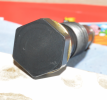
Shocking that you are having to do this on a 20k mile 2014 car. Did you change just the tensioner or the guides/ chain as well? I fitted type 3 as shown on your image, direct from BMW so I'm pretty certain it is the latest design. It was about 3mm longer than the one I took out. The engine does not now rattle at cold startup but still rattles when driving until the engine is warm.
The myth that these later cars have better internals needs to be well and truly discredited.
 

Attachments

  • new tensioner.jpg
    new tensioner.jpg
    29.7 KB · Views: 6

Pedro

Well-Known Member
Joined
Jan 16, 2020
Messages
2,858
Reaction score
880
Points
113
Location
Cheshire
Hi Non…the timing chain tensioner is a well documented weak link in this engine and the RCZ. I have seen 3 incarnations, as seen it pic 1. The plain face is apparently the oldest and in my opinion should be ditched as it was responsible for for the early failures….and if there is a warehouse somewhere full of them, they should be ground down into iron filings, not continue to be distributed….that would be totally irresponsible. I made a point, when ordering mine, not to send this one. I received the one with the dimple, centre in pic. But I fear I must shatter some perceived views about this model…the one I took out of my car was also a dimple version and it was truly knackered, see pic 2. I hope the one I put in will last longer…my car has only done 20,000 miles (2014 model). The one I put it also has a serial number stamped on the face, see pic 3…so it might be possible to trace its manufactured date. I might try and do that. Regarding the rest of your internals…they would of course be 2013 unless you had a full timing chain kit refit…then it should be the latest that was manufactured…again parts should come with part numbers and possible serial numbers, so it would be wise to check what garages are installing…I certainly will…fortunately this engine is used in the BMW Mini which has a longer manufacturing history than the RCZ.…so I would have thought further development may have been done.
If your running on 0w30 oil dump it for 5w30 it will help alleviate the problems
 

MJZ

Member
Joined
Oct 6, 2021
Messages
42
Reaction score
15
Points
8
Location
France
Hi Non…the timing chain tensioner is a well documented weak link in this engine and the RCZ. I have seen 3 incarnations, as seen it pic 1. The plain face is apparently the oldest and in my opinion should be ditched as it was responsible for for the early failures….and if there is a warehouse somewhere full of them, they should be ground down into iron filings, not continue to be distributed….that would be totally irresponsible. I made a point, when ordering mine, not to send this one. I received the one with the dimple, centre in pic. But I fear I must shatter some perceived views about this model…the one I took out of my car was also a dimple version and it was truly knackered, see pic 2. I hope the one I put in will last longer…my car has only done 20,000 miles (2014 model). The one I put it also has a serial number stamped on the face, see pic 3…so it might be possible to trace its manufactured date. I might try and do that. Regarding the rest of your internals…they would of course be 2013 unless you had a full timing chain kit refit…then it should be the latest that was manufactured…again parts should come with part numbers and possible serial numbers, so it would be wise to check what garages are installing…I certainly will…fortunately this engine is used in the BMW Mini which has a longer manufacturing history than the RCZ.…so I would have thought further development may have been done.
Whoops….posted wrong 2nd pic….thats not my tensioner…mine actually looked ok but it wouldnt compress the way a new one does and kept sticking….
 

nonlinear

New Member
Joined
Jul 19, 2022
Messages
11
Reaction score
2
Points
3
Location
East Sussex, UK
If your running on 0w30 oil dump it for 5w30 it will help alleviate the problems
Is that based on personal experience? Could you explain the thinking on that. The original spec was 5w30 and BMW/ PSA later changed it to 0w30, presumably in response to the lubrication issues. The 0w30 is less viscous at cold start so should get up to the tensioner quicker than 5w30.
 

Pedro

Well-Known Member
Joined
Jan 16, 2020
Messages
2,858
Reaction score
880
Points
113
Location
Cheshire
5w.30 is a slightly heavier oil its viscosity will take longer to break down 0.30 which was formulated for colder climates the type we never see in the UK anymore so I cannot see the relevance in using it in a moderate climate as for lubrication issues in a HPT engine I would assume a more viscous oil would offer better protection & indie garages & dealers use 0.30 because they buy it by the tonne because as its cheaper
When I changed my Timing chain tensioner it was covered with a sticky oily residue after standing overnight & having serviced the car 6 months earlier adding 5w30 I'm convinced my engine will definitely out live yours if your proffered choice is the Rat piss 0w.30
 

MJZ

Member
Joined
Oct 6, 2021
Messages
42
Reaction score
15
Points
8
Location
France
Plasmas comments are not based upon any scientific publications, just personal opinion and in my view should be ignored…it is well documented that Peugeot now recommend 0W30 to its original spec of 5W30….if you read the science behind an oils viscosity you would getting a better idea of why they changed it….
 

MJZ

Member
Joined
Oct 6, 2021
Messages
42
Reaction score
15
Points
8
Location
France

WHAT DO OIL VISCOSITY NUMBERS MEAN?​


Viscosity is the resistance to flow of a fluid. Motor oil viscosity grades are based on a scale developed by the API (American Petroleum Institute) lubricant organization. The values are defined in a specification known as API 1509 and are based on the resistance the oil gives to flowing at two different temperatures – cold and high temperature. The measurement of viscosity at high and low temperatures are properties of multi-grade oils. Years ago, most vehicles used one viscosity grade oil in the summer and a different viscosity grade oil in the winter. But as motor oil technology advanced, additives such as viscosity index improvers allowed for the use of the same grade of oil year-round.


The low temperature viscosity of the oil is a measurement that simulates starting a car on a cold winter day. That value has the letter “W” after the number and has a dash after the W. For example, if the oil is a 5W-30, the 5W part describes the viscosity of the oil at low temperatures. The lower the number, the faster the oil will flow at vehicle start up.


The high temperature viscosity is the number after the dash and is related to the viscosity of the oil as it is moving around your engine after the car has warmed up and is at normal engine temperature. In the 5W-30 example, the 30 defines the viscosity of the oil at normal engine temperatures. Again, the lower the number, the lower the viscosity of the oil and the faster the oil will move around the engine.


As an example, let’s compare 5W-20, 5W-30 and 10W-30 motor oils. A 5W-20 and 5W-30 will have very similar if not equal viscosity at lower start-up temperatures. But as the engine heats up, the 5W-20 will move with less resistance than an 5W-30. Less resistance results in improved fuel economy but the oil is not as thick and forms a smaller layer of protection between metal surfaces. If we compare a 5W-30 and a 10W-30, they will behave very similarly as the engine heats up, but at start-up, the 5W-30 will provide less resistance and start easier than the 10W-30. The 5W-20 will have a lower viscosity and provide less resistance than the 10W-30 at both start-up and normal engine operating temperatures.


In the past, it was common for vehicles to require higher viscosity oils such as 20W-50’s, 10W-40’s and 10W-30’s. But as engine technology has advanced over the years, the size of engines and pathways in engine that oil flows through have gotten smaller and thinner. This has led over time to motor oil viscosity decreasing – currently 5W-30 and 5W-20 are the most popular grade and 0W-20 is the fastest growing grade. These lower viscosity motor oils are needed to move through the thin engine pathways to protect and clean metal surfaces. Lower viscosity motor oils also result in better fuel economy.

 

Pedro

Well-Known Member
Joined
Jan 16, 2020
Messages
2,858
Reaction score
880
Points
113
Location
Cheshire
Higher viscosity oils means better protection for an engines internal parts!
 

Pedro

Well-Known Member
Joined
Jan 16, 2020
Messages
2,858
Reaction score
880
Points
113
Location
Cheshire

WHAT DO OIL VISCOSITY NUMBERS MEAN?​


Viscosity is the resistance to flow of a fluid. Motor oil viscosity grades are based on a scale developed by the API (American Petroleum Institute) lubricant organization. The values are defined in a specification known as API 1509 and are based on the resistance the oil gives to flowing at two different temperatures – cold and high temperature. The measurement of viscosity at high and low temperatures are properties of multi-grade oils. Years ago, most vehicles used one viscosity grade oil in the summer and a different viscosity grade oil in the winter. But as motor oil technology advanced, additives such as viscosity index improvers allowed for the use of the same grade of oil year-round.


The low temperature viscosity of the oil is a measurement that simulates starting a car on a cold winter day. That value has the letter “W” after the number and has a dash after the W. For example, if the oil is a 5W-30, the 5W part describes the viscosity of the oil at low temperatures. The lower the number, the faster the oil will flow at vehicle start up.


The high temperature viscosity is the number after the dash and is related to the viscosity of the oil as it is moving around your engine after the car has warmed up and is at normal engine temperature. In the 5W-30 example, the 30 defines the viscosity of the oil at normal engine temperatures. Again, the lower the number, the lower the viscosity of the oil and the faster the oil will move around the engine.


As an example, let’s compare 5W-20, 5W-30 and 10W-30 motor oils. A 5W-20 and 5W-30 will have very similar if not equal viscosity at lower start-up temperatures. But as the engine heats up, the 5W-20 will move with less resistance than an 5W-30. Less resistance results in improved fuel economy but the oil is not as thick and forms a smaller layer of protection between metal surfaces. If we compare a 5W-30 and a 10W-30, they will behave very similarly as the engine heats up, but at start-up, the 5W-30 will provide less resistance and start easier than the 10W-30. The 5W-20 will have a lower viscosity and provide less resistance than the 10W-30 at both start-up and normal engine operating temperatures.


In the past, it was common for vehicles to require higher viscosity oils such as 20W-50’s, 10W-40’s and 10W-30’s. But as engine technology has advanced over the years, the size of engines and pathways in engine that oil flows through have gotten smaller and thinner. This has led over time to motor oil viscosity decreasing – currently 5W-30 and 5W-20 are the most popular grade and 0W-20 is the fastest growing grade. These lower viscosity motor oils are needed to move through the thin engine pathways to protect and clean metal surfaces. Lower viscosity motor oils also result in better fuel economy.
 

Pedro

Well-Known Member
Joined
Jan 16, 2020
Messages
2,858
Reaction score
880
Points
113
Location
Cheshire
Judging by the length of this response He must have been trawling the internet all night !😂
 

nonlinear

New Member
Joined
Jul 19, 2022
Messages
11
Reaction score
2
Points
3
Location
East Sussex, UK
Yea shame the Frogs got slaughtered maybe they just didn't have the guts to fight!!
That isn't what I meant, and this isn't the place for racial slurs. I appreciate MJZ's input and largely agree with him. I'll be sticking with the 0w30 unless I see documented proof a thicker grade will help with the chain rattle. The real solution of course is to get it replaced.
 
Last edited:

nonlinear

New Member
Joined
Jul 19, 2022
Messages
11
Reaction score
2
Points
3
Location
East Sussex, UK
Why do you think it's acceptable to make insulting comments about the French here? It isn't. You do realise you are driving a French car, right? MJZ and myself understanding the complexities of oil would make us technophiles, not technophobes, and I'd sooner be a bore than a boor (look it up).
 

Pedro

Well-Known Member
Joined
Jan 16, 2020
Messages
2,858
Reaction score
880
Points
113
Location
Cheshire
I'm driving a German made car from Austria FFS !!
 
Top